Real-time trading
Products, offers, variation, buy, sell, limit, and daily trades coexist on the same surface.
I transformed a 2010s energy ERP into a modern trading terminal, preserving the operational depth the free energy market requires.
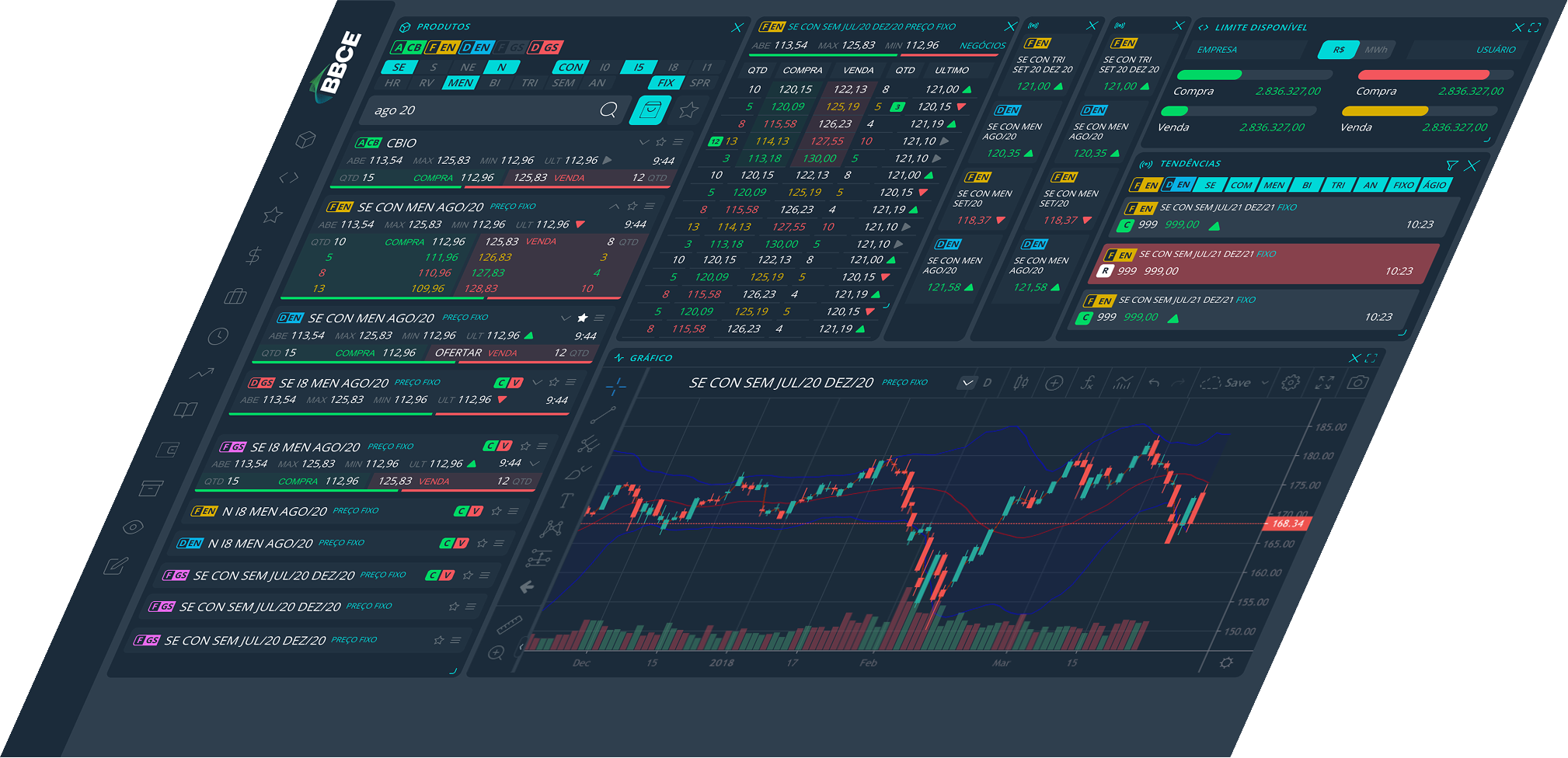
BBCE E-HUB is an energy trading platform. Unlike a conventional dashboard, the product needs to support a routine where operators monitor products, read order books, check limits, place orders, register contracts, track authorizations, and receive communications relevant to the operation.
On an energy trading desk, too much information without hierarchy becomes noise. Too little information becomes risk. The design needed to preserve the density required to operate, while organizing each action so it was clear, fast, and auditable.
Products, offers, variation, buy, sell, limit, and daily trades coexist on the same surface.
Ticket and contract flows require completeness, signature, validation, and history.
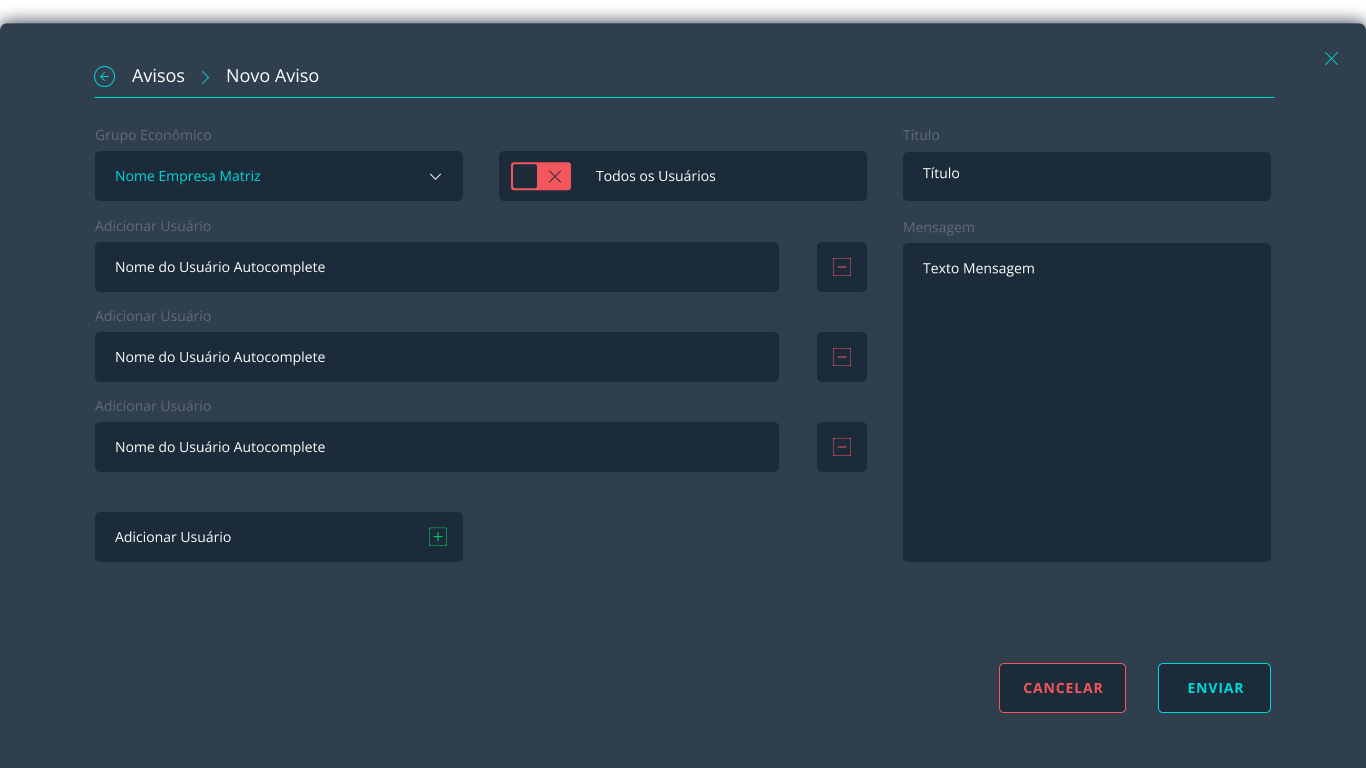
Netting, counterparty authorization, and notices are part of the same decision ecosystem.
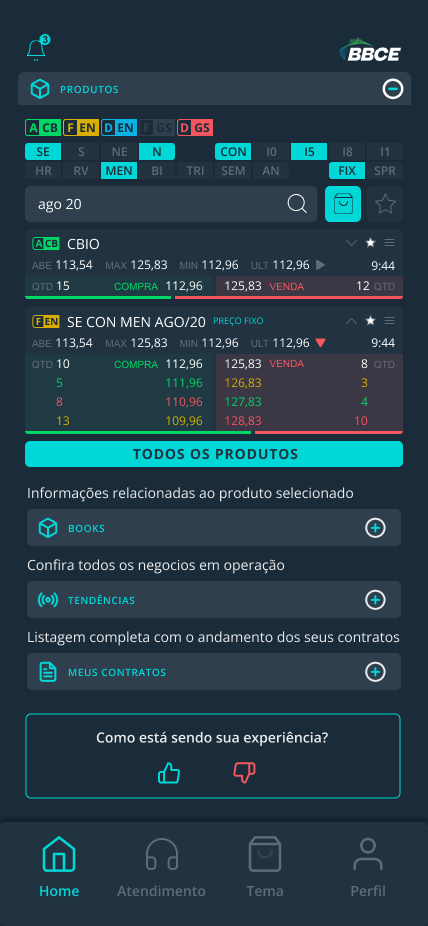
The app supports reading and targeted actions without trying to copy the full desktop density.
The operator does not think in modules. They monitor the market, identify opportunities, check limits, place an offer, register information, follow status, and depend on reliable communications. If the interface separates these steps too much or changes the visual logic without reason, it breaks the operation's mental flow.
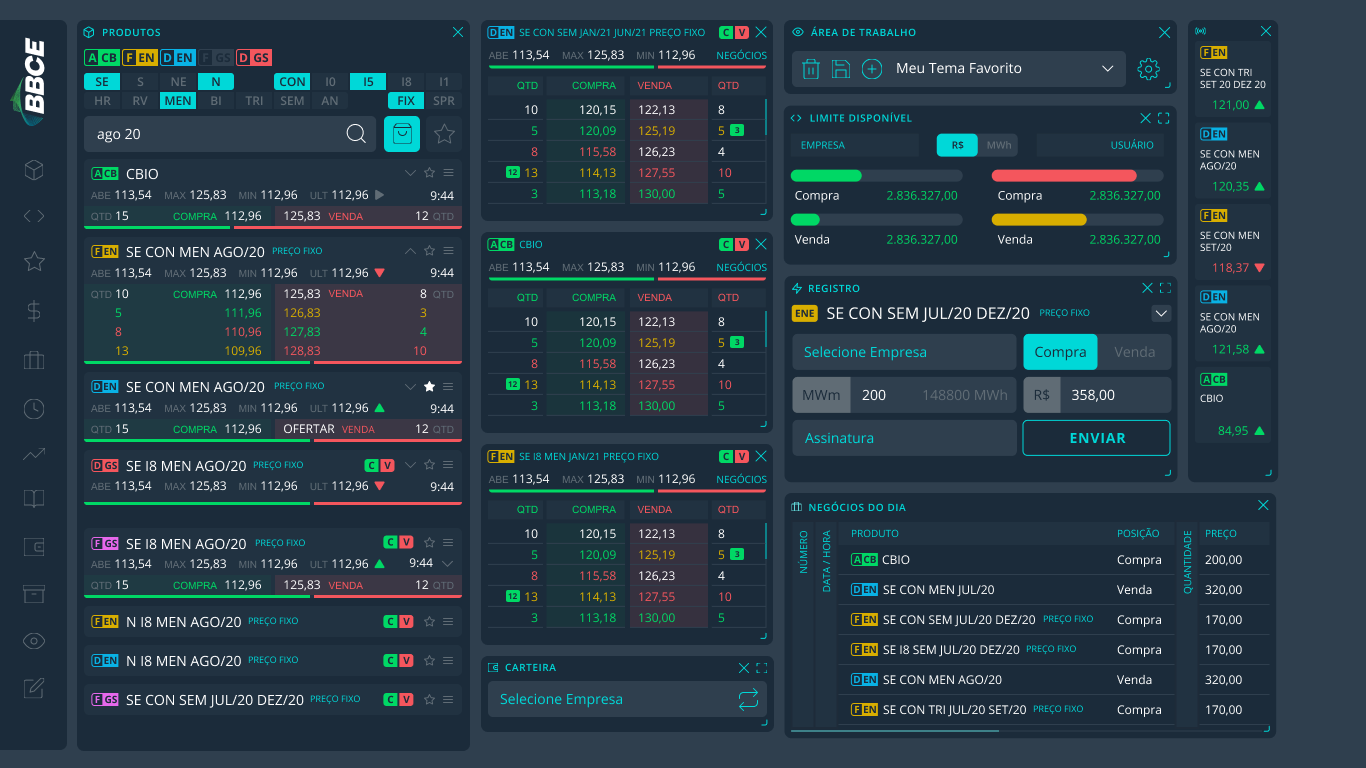
The main screen concentrates products, books, limits, registration, and daily trades on a single operational surface.
High information density, risk of offer errors, many operational states, authorization between companies, segmented communication, and a clear difference between desktop and mobile.
Instead of creating isolated screens, the redesign treated E-HUB as the operating system of the energy desk.
I worked on the redesign of the BBCE E-HUB experience, organizing flows, screens, and components for a highly complex product. The work required understanding the logic of energy trading, the data operators need on screen, the risks behind each action, and the states that need to be read quickly.
Needs to monitor market, products, offers, limits, and daily trades on the same surface. Operates under time pressure and financial consequence.
Needs to maintain control over companies, users, permissions, netting relationships, notices, and logs.
The most important visual decision was not separating screens by theme. It was creating a common language for the whole operational environment.
The decisions were guided by function, risk, hierarchy, and state. The interface needed to be fast where the desk needs to act and careful where registration requires review.
Products, book, workspace, limit, registration, and daily trades were treated as zones with clear functions. The goal was to preserve the density needed by an energy desk without giving everything the same visual weight.
The dark base supports continuity between trading, registration, and governance. Differentiation between flows happens through hierarchy, grouping, contrast, semantic color, component states, and action weight.
The theme does not separate context. Function, hierarchy, and states separate context.
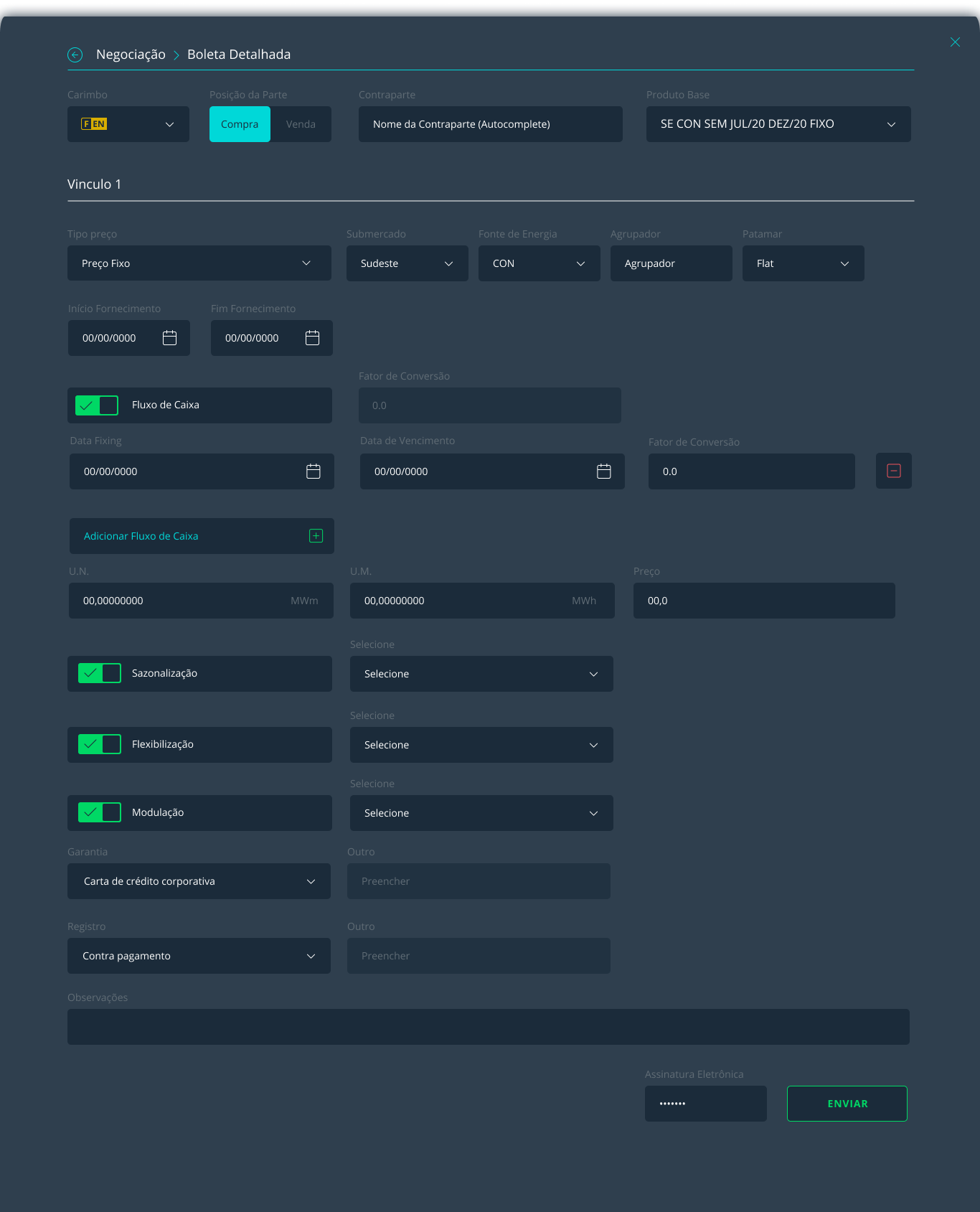
Registering a ticket involves product, counterparty, links, period, units, price, guarantees, notes, and signature. The ticket was structured as a contract flow, grouped by operational dependency and with a clear action close.
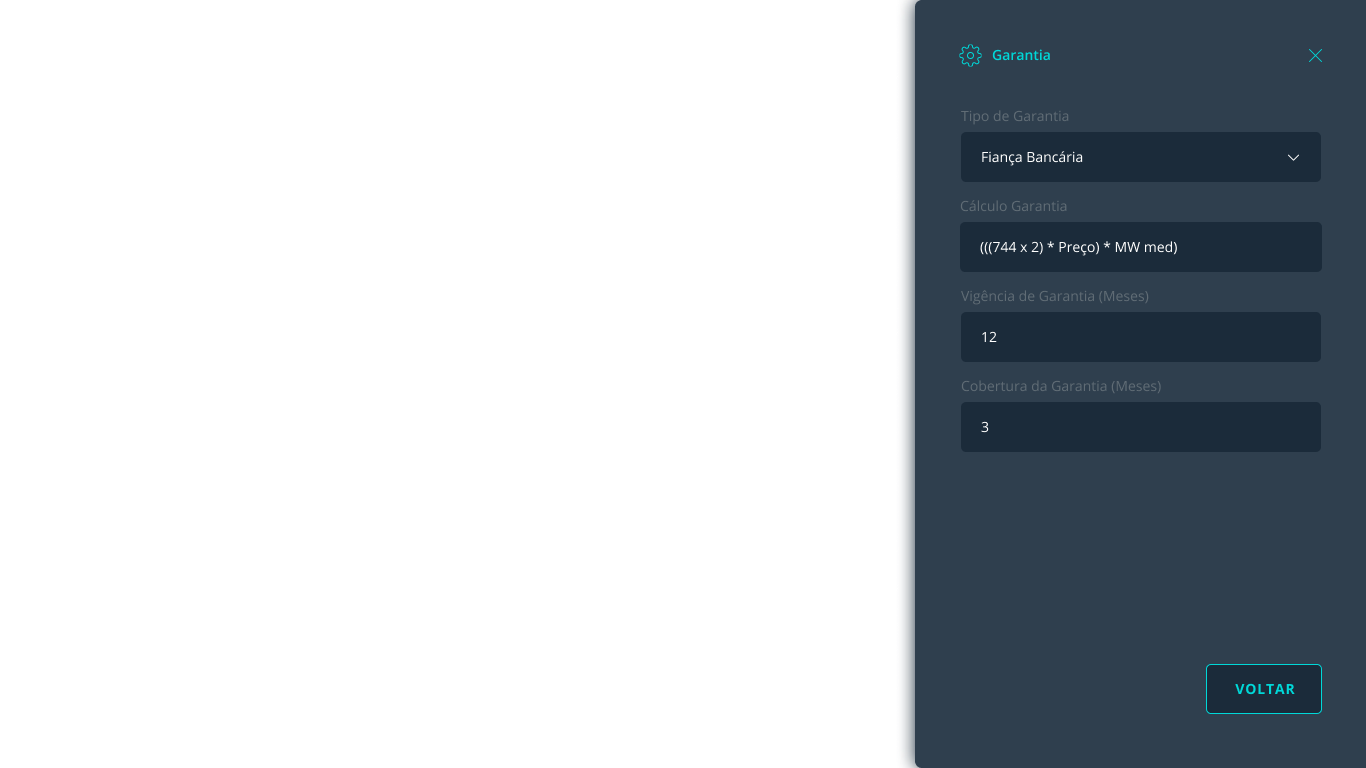
Authorization statuses are not decorative. They indicate risk, permission, and next action. Color, label, position, and consistent components help users identify pending items and blocks before acting.
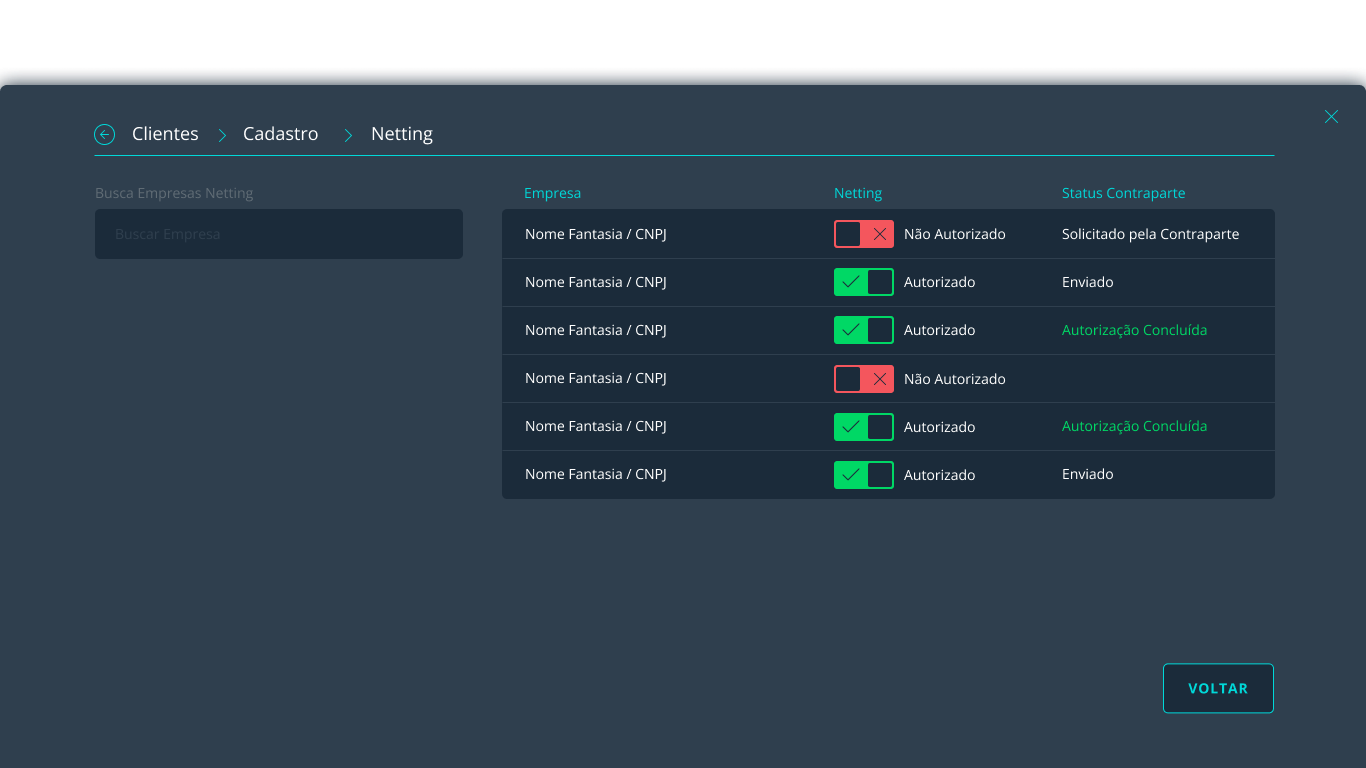
Trading favors density, quick reading, and direct action. Tickets, netting, and notices favor grouping, validation, review, and clarity of closure. The system is fast where it needs to be fast and careful where it needs to be careful.
Desktop concentrates the desk's depth. Mobile was designed as an operational extension for reading products, tracking, and placing targeted offers in a reduced context.
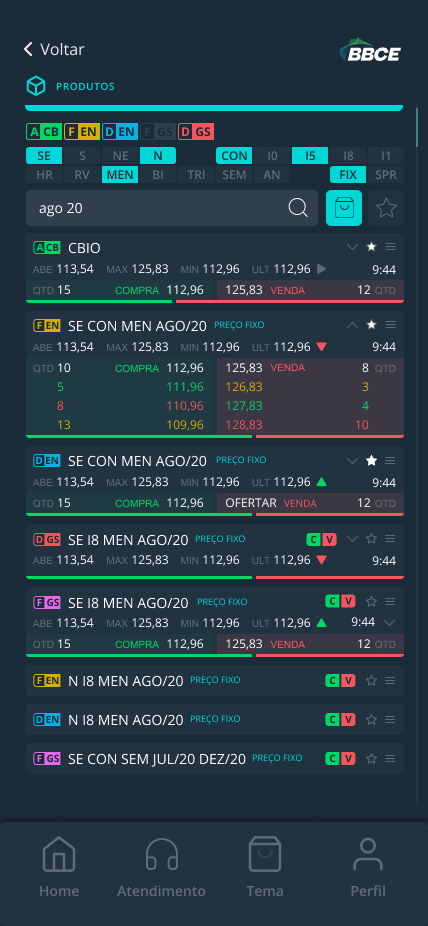
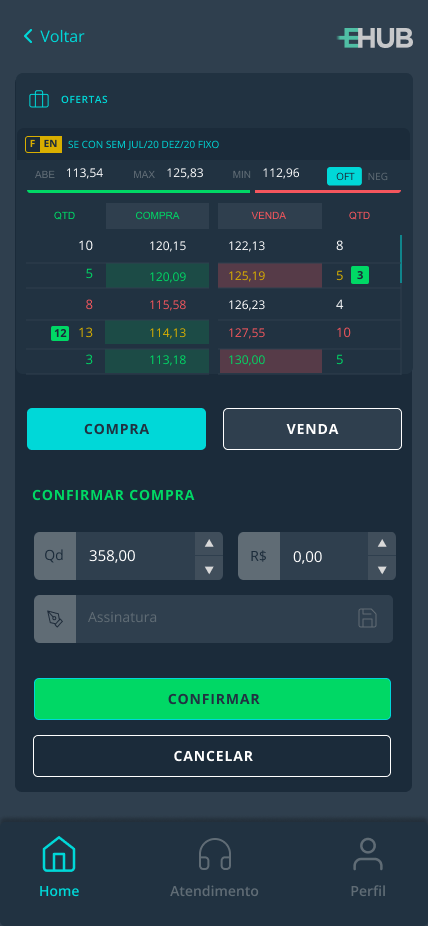
The result was a platform that covers the core operational cycle: secure access, market reading, trading, registration, counterparty authorization, communication, and mobile follow-up.
The gallery prioritizes the surfaces that tell the case story: trading, registration, governance, communication, and mobile continuity.
The main screen concentrates products, books, limits, registration, and daily trades on a single operational surface.
Registration was treated as a guided contract, with grouped fields and signature at closure.
Authorization states make relationships between counterparties more legible and auditable.
Segmented communication integrated into the system routine, without moving the operation outside the platform.
BBCE E-HUB was structured as an operational platform, not as a set of independent screens. The experience connects market data, trading action, contract registration, authorizations, communication, and mobile with a consistent visual logic.
Trading, registration, and governance share visual language and state rules.
The system differentiates operational speed and registration depth without breaking continuity.
Authorization, pending, and blocked states stop being isolated text and become decision elements.
The app keeps the essentials of the operation without trying to reproduce the full density of the terminal.